Tonsures and an Ordination to the Diaconate at the St. Herman Monastery
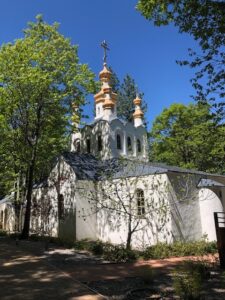
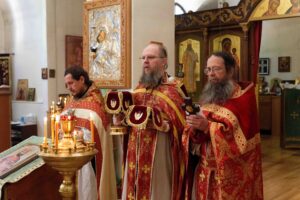
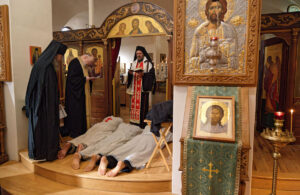
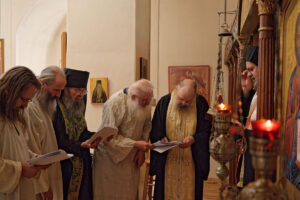
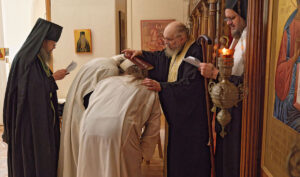
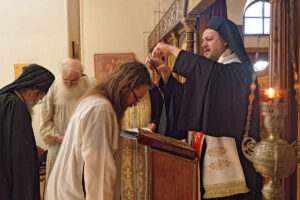
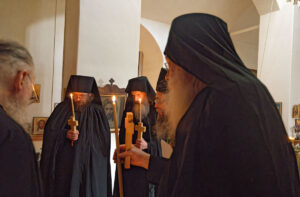
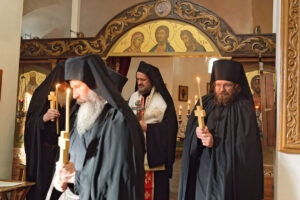
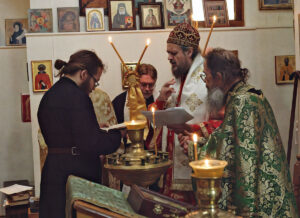
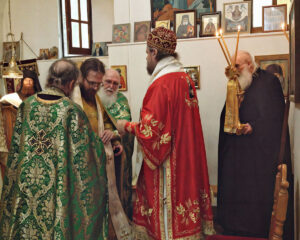
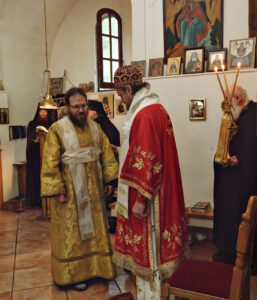
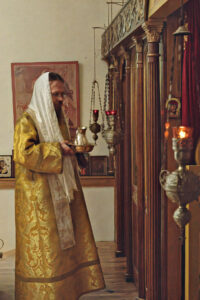
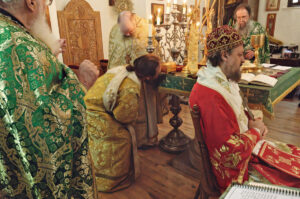
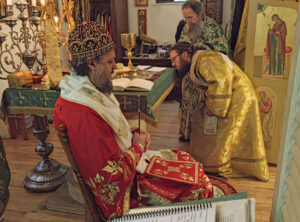
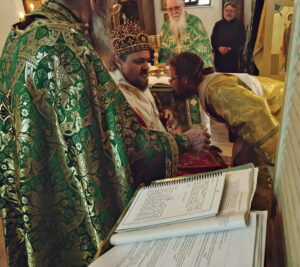
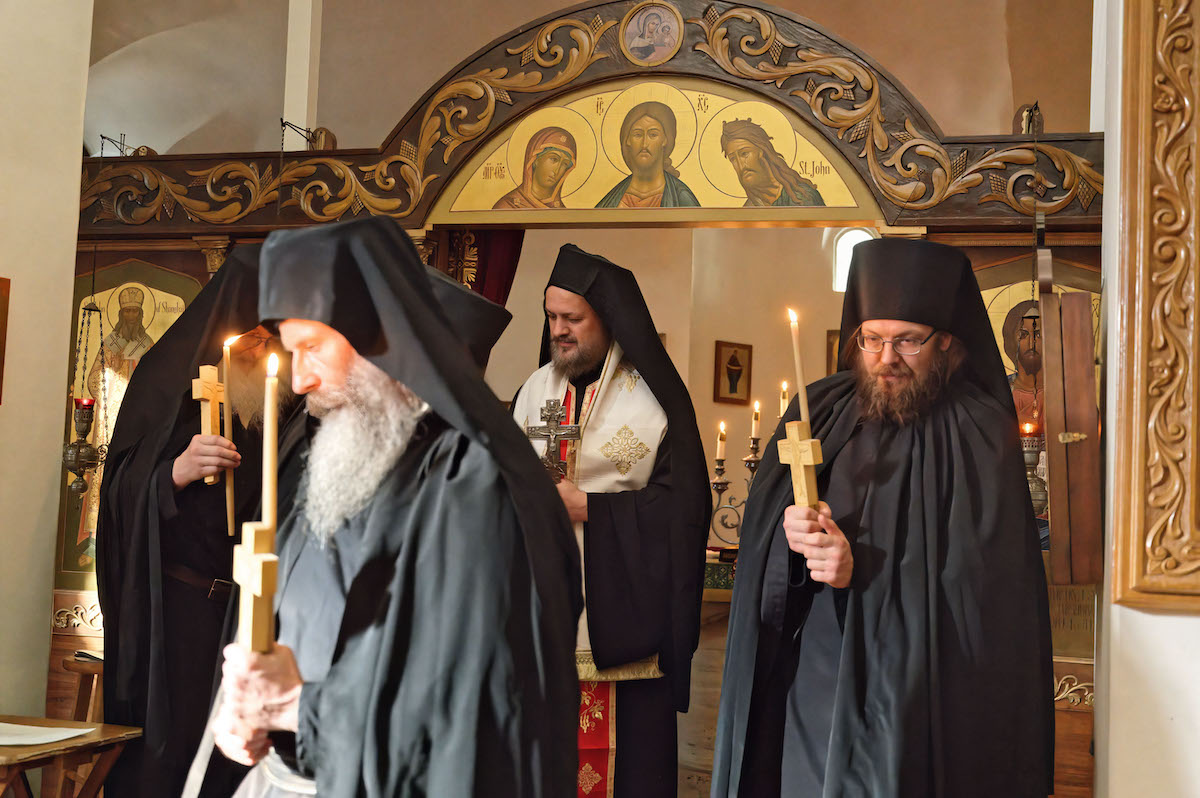 On July 29, 2025, His Grace Bishop Maxim visited Schema-abbess Joanna and the sisters of St. Xenia Skete in Wildwood, California, and in the evening came to the nearby St. Herman of Alaska Monastery in Platina. There, after Vespers, he tonsured three of the brothers as stavrophore monks. This occurred one year after he had tonsured them as ryassaphore monks. The stavrophore tonsure is the most important monastic rite, because it is then that the monastic takes full, lifelong vows. The sobering words of the rite reflect its seriousness, both in the vows themselves and in the exhortations that are given to the monks. Stavrophore means “cross-bearer,” and indeed, the monk, in giving himself wholly to Christ, vows to bear the crosses that are intrinsic to the ascetic way of life, as well as other crosses that God may give in order to perfect His servants and draw them closer to Himself. As Christ said: “If anyone desires to come after Me, let him deny himself, and take up his cross, and follow Me” (Matt. 16:24).
After the service, as the stavrophrore monks Matthew, Patrick and Ambrose stood before him wearing monastic mantles for the first time, Bishop Maxim spoke of the joy that is experienced by those who sacrifice their lives for Christ: “This joy,” he said, “conquers every sorrow. In order to reach this joy, your cross should be carried in responsibility, with love and enthusiasm. We are here for that today, praying that you will endure, and we trust and believe in you. You will do this not according to your human strength, but through the Grace of our merciful Lord Jesus Christ, Whose name is invoked throughout the entire tonsure service. You are to be in the image of His cross and His resurrection. The meaning and the fulfillment of your asceticism is found in Him Who is our risen Lord.
“May our prayers—those of your spiritual father, Fr. Damascene, of Hieromonk Paisius, of your monastic brothers, and of the sisters of St. Xenia Skete—accompany you. May your heavenly protectors – the Holy, Glorious Apostle and Evangelist Matthew, the Holy Enlightener of Ireland Patrick, and the Venerable Elder Ambrose of Optima — always be with you, giving you courage and inspiration. Although this service has the character of penitence, it already reveals the beautiful flower of repentance, which is the jewel of a spirit renewed in Christ.”
“Let us all now approach the newly tonsured monks and wish them to ‘rejoice in their cross.’”
That evening, the newly tonsured monks began to stay three days and nights praying in the church, according to monastic custom.
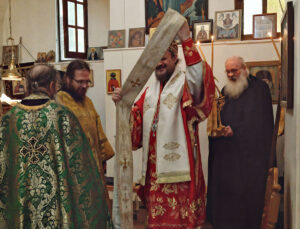
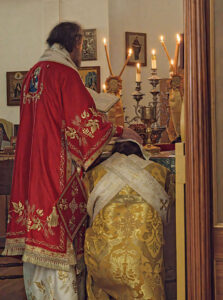
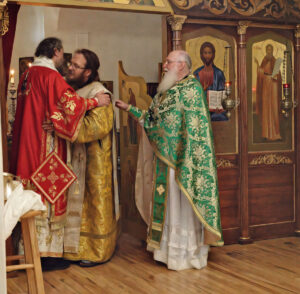
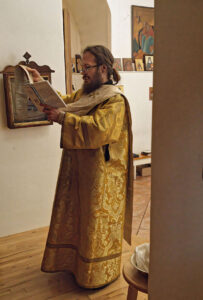
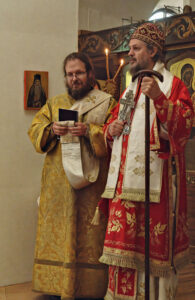
The following morning, Bishop Maxim tonsured the new stavrophore monk Ambrose as a reader and ordained him as a subdeacon. He then celebrated the Divine Liturgy, with Abbot Damascene, Hieromonk Paisius, and Priest Nektarios Rozadilla concelebrating. During the Liturgy, he ordained Fr. Ambrose to the diaconate. At the end, he addressed Hierodeacon Ambrose, saying that now he could now “celebrate the Divine Mystery of salvation which is summarized in the Holy Eucharist and also the other Mysteries, being an assistant to the clergy of this holy temple. Of course, you approach this Mystery today, and we all notice that you do so with hesitation and with questioning yourself. And that is good. At the same time, know that the Grace of God will accompany you. As the Fathers of the desert have said, we offer our efforts, but the Lord is the one who gives the fruits. Ours it is to labor, while He bears the fruits and gives them to all of us.
“In your future ministry, you will have to imitate the angelic hosts. Let us not forget that the iconography of our Orthodox Church, which started in Byzantium, always depicts deacons as angels and angels as deacons, which is really indicative of the importance of the diaconate: the mystery of a deacon’s service. The service of the angels is to glorify God, but also to serve the ministry of salvation offered to everyone in Christ. And that is why deacons are here in the Church: to invite, to encourage, to wake up, and to always be eager to serve.
 “To conclude, your patron saint is also someone who will accompany you and give you strength and courage, together with Iguman Damascene and the brothers and fathers of this holy monastery. We are looking forward to celebrating many Liturgies with you, through which the voice of the deacon will bring us the echo of the Kingdom of Heaven. It is a voice that chants, not speaks, which opens up our minds in such a way that we do not grasp the mystery; rather, we are grasped by the mystery. That is the purpose of all the chanting of the services.
“Once again, congratulations to all of you for last night’s tonsuring of the three brothers Matthew, Patrick, and Ambrose, and for today’s ordination. It’s a great day — a feast of the church for all of us. Let us rejoice and be glad.”
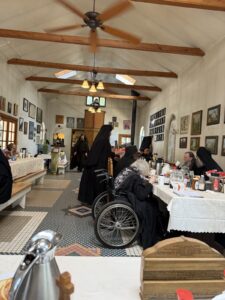
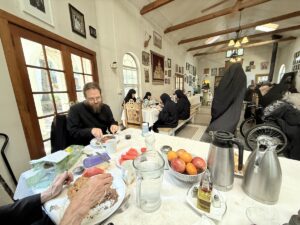
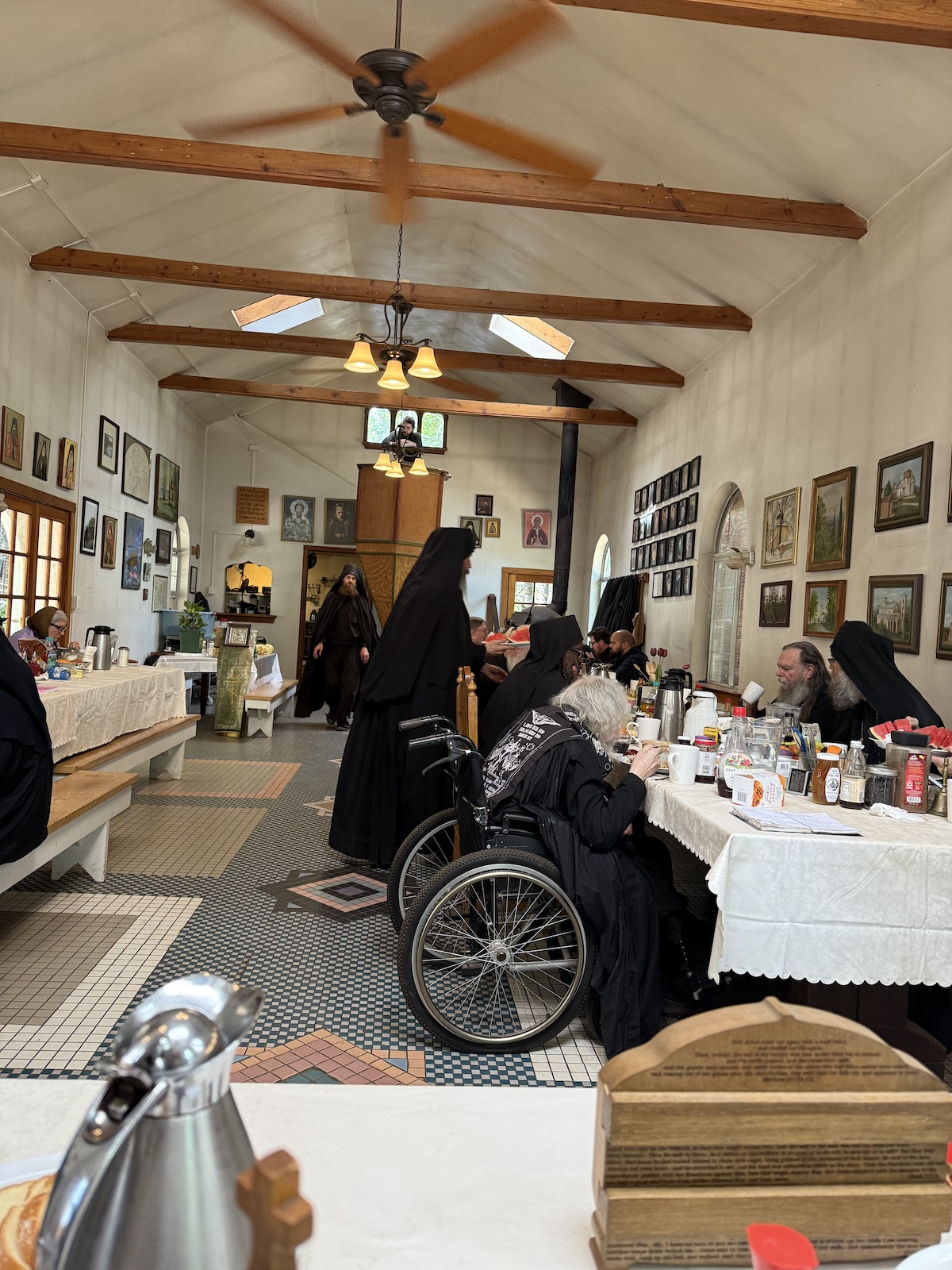
At the end of the meal in the refectory, Abbot Damascene offered words of gratitude to Bishop Maxim, who has unfailingly been a loving, gentle shepherd to our monasteries. His Grace then answered several spiritual questions from the brothers and sisters.
With the Bishop’s visit and all the Mysteries that had been performed (the Holy Eucharist, and the tonsures and ordination), a tangible sense of quiet peace was felt in the monastery. One of the brothers observed that the atmosphere appeared “lighter,” and when asked to explain, he said that the events of the two days brought with them a greater sense of “clarity.” Such is the fruit of the All-holy Spirit of God.