Day Two & Three—Pastoral-Psychological Contributions to Priestly Ministry in the Twenty-First Century
Day Two—Pastoral-Psychological Contributions to Priestly Ministry in the Twenty-First Century
The second day of the clergy seminar began promptly at 7:30 a.m. with Matins, served by Fr. Dragomir Tuba and Deacon Dusan Djordjev of St. Sava Serbian Church in Phoenix. In light of the news that Fr. Vasilios Gontikakis had passed away the previous day, Bishop Maxim served a Pomen (memorial service) at the conclusion of Matins. His Grace noted that Fr. Vasilios was a contemporary symbol of monasticism on Mount Athos as well as an important “theologian of the surprise” with an international presence and influence. May his memory be eternal.
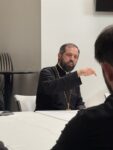
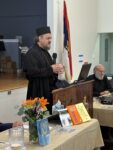
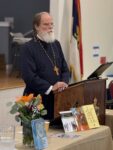
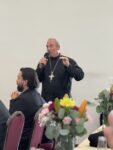
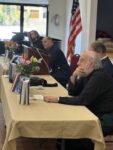
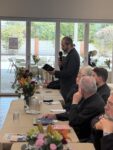
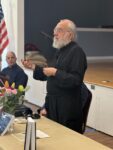
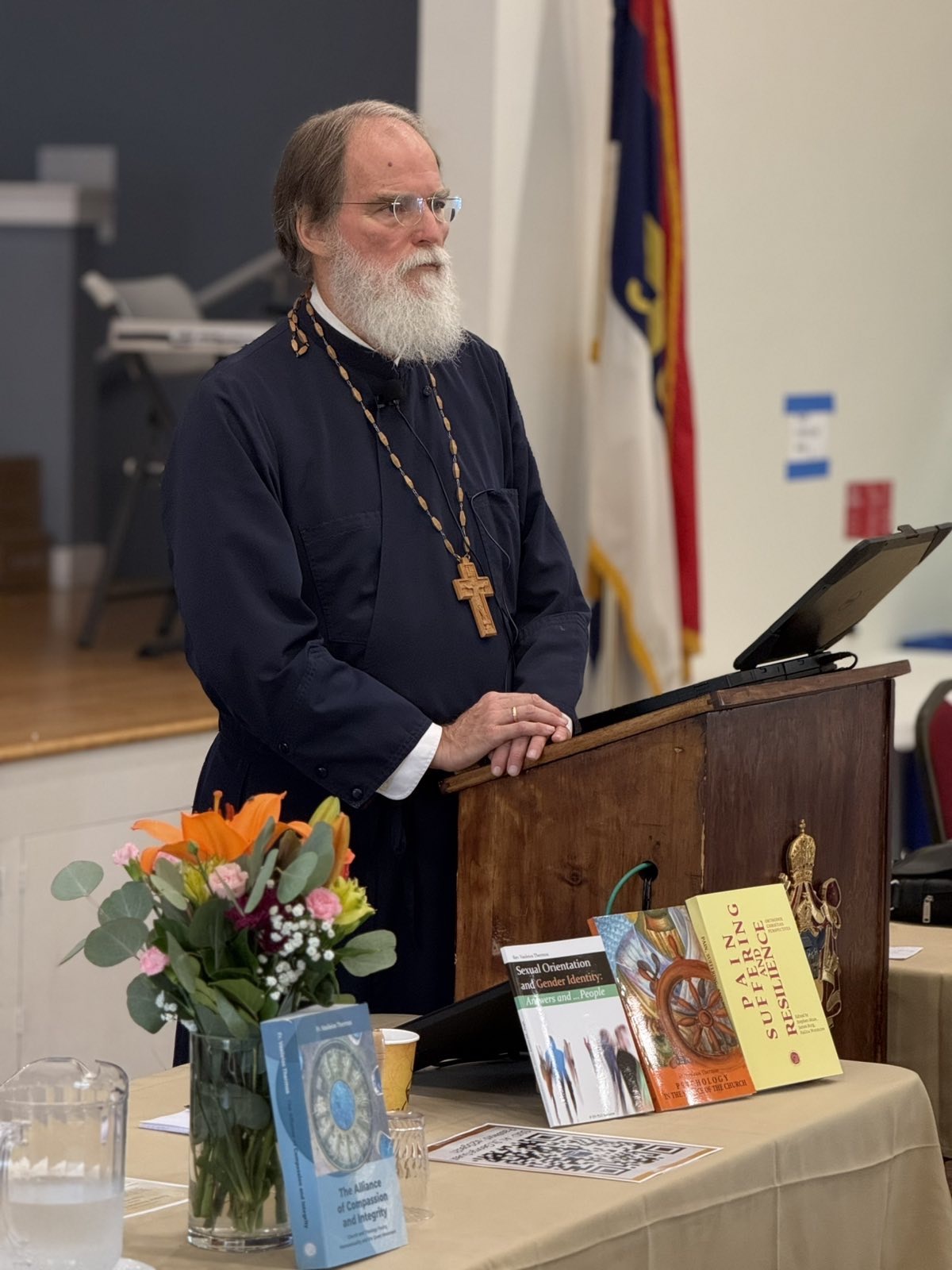 Following breakfast, Fr. Stephen Muse offered the morning presentation, titled “Hazards of VIPS: Boundaries, and Vulnerabilities in Vocation, Intimacy, Power, and Spirituality.” Fr. Stephen began with the Old Testament story of Jacob at the Jabbok River, which he said represents humanity’s core struggle with God. Struggle, he emphasized, is at the heart of human existence. God’s condescension and humility on the cross are beyond our comprehension, resulting in a paradox: we cannot overcome what we struggle with; only God can do so in Christ.
While the word Bethlehem means “house of bread,” Fr. Stephen suggested another sense: beth = house, lehem = the one who is in hand-to-hand combat. When Jesus says, “Beware the leaven of the Pharisees” (Matt. 16:6), he refers to a different leaven—one that changes and sanctifies humanity so that the body itself becomes fragrant with myrrh at death. Life’s struggles can either destroy us or become the means of our sanctification. All of our struggles are a form of martyrdom—an encounter with demons we cannot allow to defeat us. Yet we often prefer superheroes to Christ; we want to vanquish evil with superpowers, replaying the same story of one evil being defeated by another claiming to be slightly better. The Lord’s message, however, is that this battle will never end unless it comes from above. Thus Jesus tells his disciples he is going to the cross, and in response they ask if they may sit “one on the right hand and the other on the left.” While God descends to our level, we are often intent on climbing upward.
Fr. Stephen wove together scriptural exegesis, Orthodox theology, psychology, and vivid anecdotes—from combat trauma to parish life—to show how burnout, boundary violations, and narcissistic compensations arose when that struggle was avoided or hidden. Throughout, he contrasted vocation versus vainglory, intimacy versus isolation, presence versus power, and sanctification versus secularization, urging clergy to maintain boundaries, embrace humility, and live as living anaphoras—continuous offerings of themselves to God in Christ rather than building a “bank” of self-promotion or spiritual image.
One question raised after the presentation was whether the struggle for sanctification might be easier for monastics than for married clergy. Fr. Stephen replied that while monastic life may facilitate a fuller experience of the liturgical, prayer, and ascetical life, it does not mean those elements are absent in the world. His message was simple: pay attention to daily life and do not despise the ordinary, and you will make much progress.
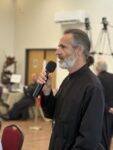
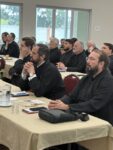
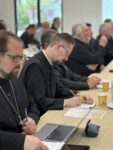
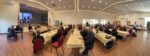
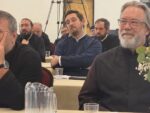
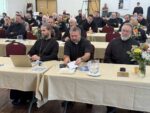
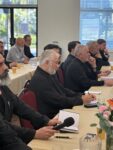
After the presentation, the clergy divided into discussion groups—one of more experienced clergy and the other of younger clergy. Zoom participants formed their own group. Each group was asked to share and discuss topics presented both on the previous day and in that morning’s session.
The younger group reflected on narcissism—how much of it is “real” narcissism versus something else—and on how God accepts the raw material we offer, whether priesthood, marriage, or other vocations. They also noted how people outside the church sometimes manifest virtues we would call Christian, yet these virtues are less evident in some who regularly attend church.
The older group discussed the significant amount of time spent with catechumens and the role of godparents, suggesting that godparent classes might be beneficial in some parishes. They also examined the “red flags” Fr. Vasileios mentioned and how many such warnings should disqualify candidates for the priesthood.
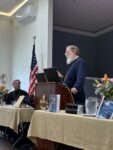
Following the post-lunch break, Fr. Vasileios offered an afternoon presentation titled “Clergy Burnout and Well-Being.” Clergy, he noted, are both valuable and vulnerable. The very nature of their ministry is demanding, requiring them to address a wide variety of stressful situations while often lacking time to recover. Leadership in a parish is inherently stressful. Personality also plays a role: the ambitious priest eager to prove himself, the perfectionist unaware of his limitations, or the guilt-driven priest acting as though his achievements could appease God. A third factor is context: the church as an organization may not provide adequate support for a priest facing conflicts in his parish or personal life. Many priests lack close friends nearby; their friends live far away. Rivalries may also develop between priests—young and old, large and small parishes, and so on. Fr. Vasileios offered a rich treasury of experiences illustrating the many causes of clergy burnout and emphasized the importance of recognizing one’s capacities.
Rev. Vasileios Thermos highlights the high risk of burnout among Orthodox clergy due to the demanding and multifaceted nature of parish ministry, personality factors such as perfectionism or guilt-driven service, and contextual challenges including lack of support, family pressures, and isolation. Drawing on a large study of clergy and presvyteras (priest-wives) in Greece and the U.S., Fr. Vasileios shows elevated rates of psychosomatic disorders—such as high blood pressure, anxiety, headaches, and excessive fatigue—especially during the first two decades of spiritual fatherhood. He emphasizes that empathy, though essential, carries its own cost, and that both clergy and their families suffer from the cumulative stress of pastoral life. His research underscores the urgent need for organizational support, fraternal care, and realistic self-awareness to preserve the health and vocation of priests and their families.
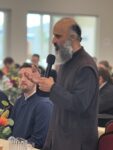
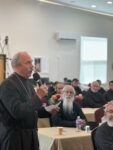
During the lively discussion that followed, Fr. Vasileios noted, in response to a question about clericalism, that clericalism is essentially an illness never intended to be part of the church’s life. In many cases, he said, people approach and even encourage the priest to destroy himself through the system of clericalism.
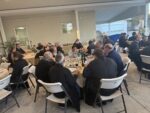
A rich dinner prepared by the women of our host parish of St. George in San Diego served as a fitting conclusion to a day filled with prayer, presentations, discussion, and fellowship.
Fr. Milovan Katanic
Day Three – Pastoral-Psychological Contributions to Priestly Ministry in the 21st Century
The Matins service marked the beginning of the third and final day of the clergy seminar, served by Fr. Panayiotis Tekosis and Deacon Christopher Menges.
After breakfast, clergy were ushered into the main hall, where the morning’s moderator, Fr. Dean Kaldoukis, announced the final presentation to be given by Fr. Stephen Muse: “Clergy Burnout and Well-Being, Part II.” In his introductory remarks, Fr. Dean shared a touching story in which, facing challenges in the priesthood, he sought a psychiatrist. What he expected to take a month ended up lasting three years. Not only did his ministry improve, but so did his marriage and personal life. “I’m sharing this with you,” he concluded, “because the invitation that Fr. Stephen and Fr. Vasileios are offering is powerful, and the message is clear: do not be afraid of what needs to be healed in you.”
Fr. Stephen opened his presentation by stating that the deeper the access of grace and love into the parts of us that are exiled, the better our ministry will be and the healthier we will become. After years of experience, it is evident, he said, that the spiritual context and the spiritual life are the most effective healing factors. When grace touches and renews us on a deeper level, healing encompasses our entire being so that our sleep, our health, and our mental faculties are restored. This, ultimately, is the most important thing for us to remember.
Fr. Stephen then described different domains of burnout. Physically, there is chronic fatigue, difficulty maintaining pace, and sleep disruption leading to depression. Mentally, concentration diminishes and thinking narrows, making it hard to see a way out of problems. Emotionally, feelings of helplessness and hopelessness arise, accompanied by a deep sense of shame and worthlessness. These conditions create an altered state of consciousness from which we must recover before making major decisions. Yet, he emphasized, even in trials and obstacles, God is present—paradoxically present even when we experience his absence. The purest expression of divine love is through the Cross, through that very experience of God seeming absent. The person must open up the place of their exile to bring vitality to their healing. Focusing on spiritual progress transforms problems so they are not exhausting.
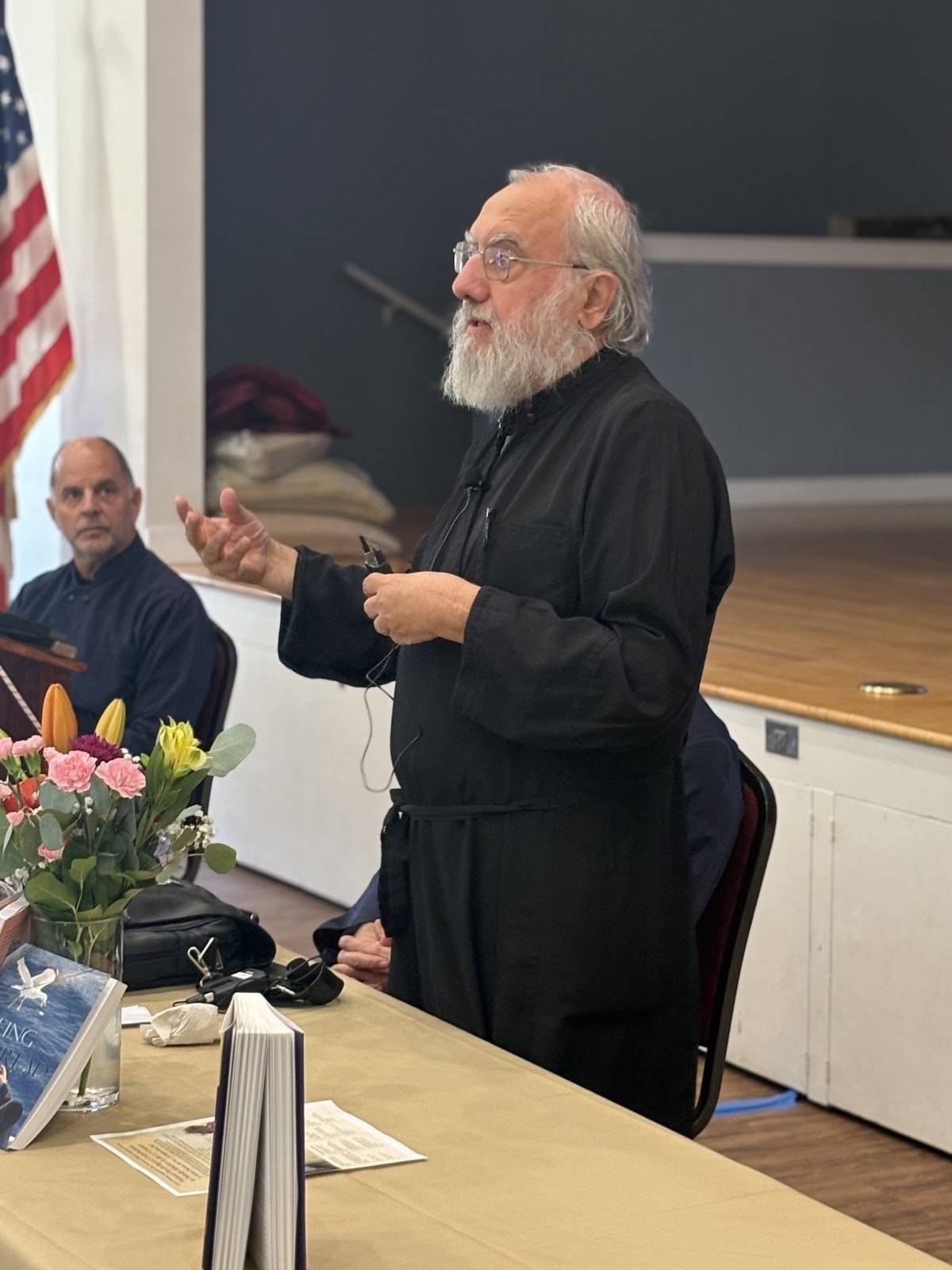 Before the clergy were once again divided into discussion groups, Fr. Vasileios offered a few words describing the ultimate goal of this three-day course, which will continue with weekly online lessons throughout September, October, and November, concluding before Christmas. He noted that burnout often begins with the personality of the candidate. Since addressing such issues at the organizational level is presently lacking, the task is to conceive a unified vision for the selection, formation, treatment, and care of priests—one that ideally prevents burnout and is prepared to treat it when it appears.
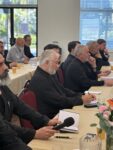
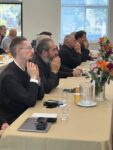
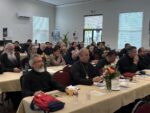
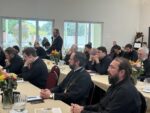
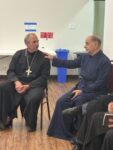
In their discussion groups, clergy spoke candidly and openly, sharing both professional and personal experiences in light of all the topics raised during the seminar. While the discussions did not resolve any specific problems, they proved very helpful and even therapeutic.
Bishop Maxim offered his final closing remarks, thanking the speakers, His Eminence Metropolitan Gerasimos, and all clergy and participants. “We’ve heard so many important things,” His Grace noted, “aspects and details not only about the general perspective but also about the ‘science of sciences and the art of arts,’ as St. Gregory the Theologian called the priestly calling—the priest and the priestly ministry. We heard here how this science and art are treated without reducing the priestly duties to mere psychology or biology or any particular manifestations. We
learned how it can work in a healthy way so that we who strive to be healthy beings—meaning to have clear, correct, and fulfilling relationships with God, with human beings, and with nature—can do so. The natural environment also constitutes us as healthy beings, and I am certain our speakers will cover that topic in the future. There are so many topics and opportunities for us to listen and learn more. For instance, the role of forward-lookingness—the future—is something I personally hope to hear from the speakers: how the reality of the Age to come interferes with our lives, colors it, and makes it healthier, et cetera, et cetera.”
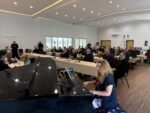
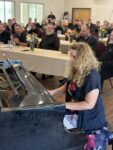
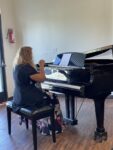
His Grace then introduced one final addition—a surprise to the program—a musical piano piece performed by Mirjana Anastasijevic.
Finally, a delicious Lenten meal was prepared for all participants. Afterward, one by one, they received the bishop’s blessing, said their goodbyes to old and new friends alike, and bid each other farewell until Wednesday’s virtual reunion via Zoom.
Fr. Milovan Katanic