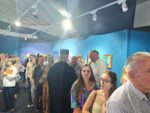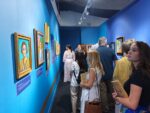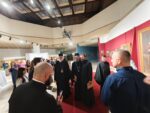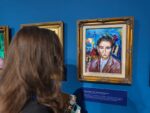
Exhibition by Bishop Maxim Opens at the Museum of Republika Srpska in Banja Luka
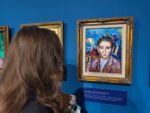
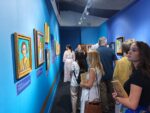
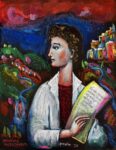
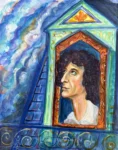
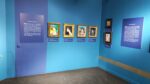
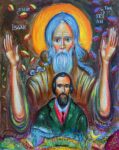
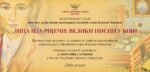
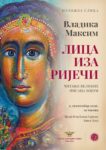
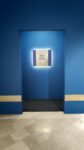
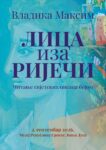
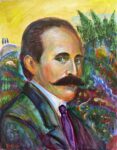
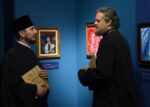
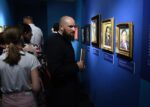
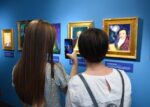
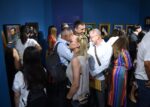
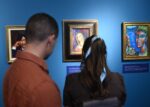
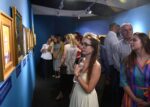
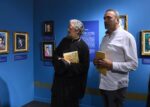
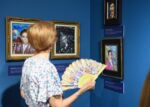
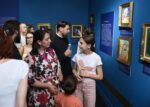
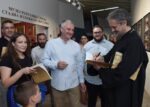
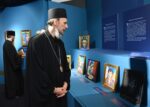
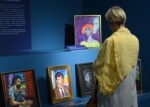
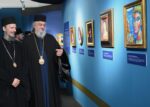
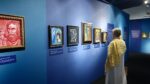
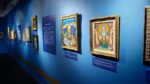
BANJA LUKA, September 2, 2026 — “Faces Behind the Words: Reading Great Writers in Color,” an exhibition of paintings by Bishop Maxim of Western America, has formally opened at the Museum of Republika Srpska in Banja Luka. The exhibition brings together 60 acrylic portraits of writers, poets, thinkers, theologians, and other figures whose work has shaped world and local culture.
The paintings are arranged in thematic groups through which Bishop Maxim reflects on the relationship between face and personhood, literature and painting, word and color. The exhibition was conceived not as a catalogue of famous names, but as an invitation to seek the book behind the painted face and, behind the written word, the unrepeatable person.
A Book Read at the Right Time
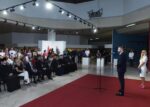
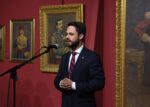
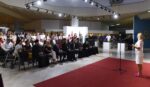
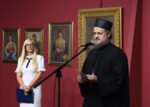
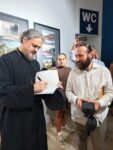
Addressing those gathered at the opening, Bishop Maxim spoke in particular about the importance of reading in an age of rapid information and fleeting attention.
“Somewhere tonight there is a young person — perhaps in this city, perhaps even in this room — who has not yet read Dostoevsky. Who has not yet opened Andrić, Camus, Emily Dickinson, or Kahlil Gibran. Who does not yet know that a single book, read at the right time, can quietly alter the course of an entire life,” Bishop Maxim said.
As the exhibition’s spiritual frame, he recalled St. Basil the Great’s advice that young Christians should read the classical authors with discernment — like bees gathering from flowers only what can be made into honey.
In his words, reading is not merely the accumulation of knowledge, but “an exercise in attention and discernment,” while attention is already the beginning of love: the capacity to pause before another person without reducing that person to a preconceived idea.
A Face Can Never Be Fully Translated
Speaking about the genesis of the cycle, Bishop Maxim explained that the paintings grew out of many years of reading and encounters with literary works.
“Books would remain open on the table, and the faces of their authors would stay with me long after I had closed the pages. Painting thus became a kind of reverse translation: from words back into a face, from a sentence into color, from the literary world into a gaze,” the artist said.
He emphasized that a portrait is not an attempt to encompass, explain, or appropriate a person.
“A face can never be fully translated. It is not an object that we can possess, explain, and enclose within a frame. A face is an invitation to encounter. Perhaps this is precisely the ascetic discipline of painting: attention without greed, closeness without possession,” Bishop Maxim said.
At the center of the exhibition, therefore, is more than a physical likeness of the figures represented. Each portrait raises questions about the person behind the work: what that person saw, what wound he or she carried, and what the reader of today has yet to discover.
Krajina as an Inner Homeland
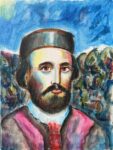
Petar Kočić and Branko Ćopić hold a special place in the Banja Luka exhibition: their faces are inseparable from the landscape and memory of Krajina.
Kočić’s face emerges on the canvas from the soil of Zmijanje, its hills, forests, hardships, and freedom. In Ćopić, Krajina appears as an inner homeland — as childhood, friendship, and the laughter that helps a person bear what would otherwise be unbearable.
Alongside them, the exhibition guides visitors through a range of literary and spiritual landscapes: from Andrić’s bridge as a place where human destinies meet and part, through the medieval tombstones of Mak Dizdar, to the inner country that Marina Tsvetaeva carried with her through exile.
The Monograph as a Continuation of the Exhibition
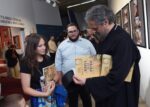
The exhibition is accompanied by a monograph of the same title, published by the Museum of Republika Srpska in cooperation with St. Sebastian Press of Los Angeles.
The book extends the visual dimension of the exhibition through essays on the figures portrayed and the thematic links among them. More than a catalogue of reproductions, the monograph is a journey through the history of reading, painting, and spiritual searching.
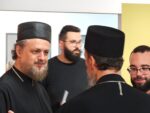
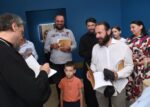
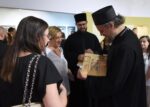
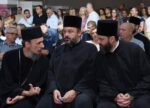
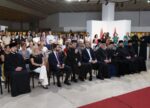
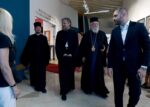
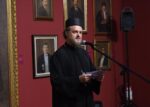
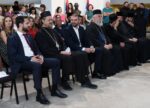
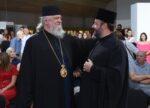
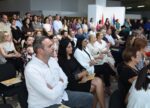
The formal opening was attended by Metropolitan Dimitrije of Zahumlje-Herzegovina and Ston-Coastlands and Bishop Kirilo of Buenos Aires and South-Central America, administrator of the Metropolitanate of Zagreb-Ljubljana, together with numerous clergy and visitors from Banja Luka and beyond.
The Exhibition as an Invitation to the Young
Concluding his address, Bishop Maxim encouraged young people to read both local and world authors, even when they do not agree with them.
“Reading is not submission to another person’s thought, but entry into a conversation in which we learn discernment. Like bees, take what can become honey: what makes the mind more alert, the heart more spacious, and a person more capable of recognizing in another human being a face, not an object,” he said.
According to the artist, the paintings will remain on the museum walls for the duration of the exhibition, while the books to which they point will endure much longer. Yet neither a book nor a portrait is fully complete until someone pauses before it.
“May this exhibition lead at least one young person to a book he or she has not yet opened. And may that book, at an hour known only to God, become a window, a companion, or a lamp,” Bishop Maxim concluded.
The project was organized by the Museum of Republika Srpska under the patronage of the Office of the President of Republika Srpska and the Ministry of Education and Culture of Republika Srpska. Nataša Džajić served as coordinator and organizer of the exhibition, while Ljiljana Korać conceived its visual presentation. The accompanying monograph was designed by Denis Vikić and features a foreword by Aleksandar Jerkov.